Understanding the logic behind Daily Tiles
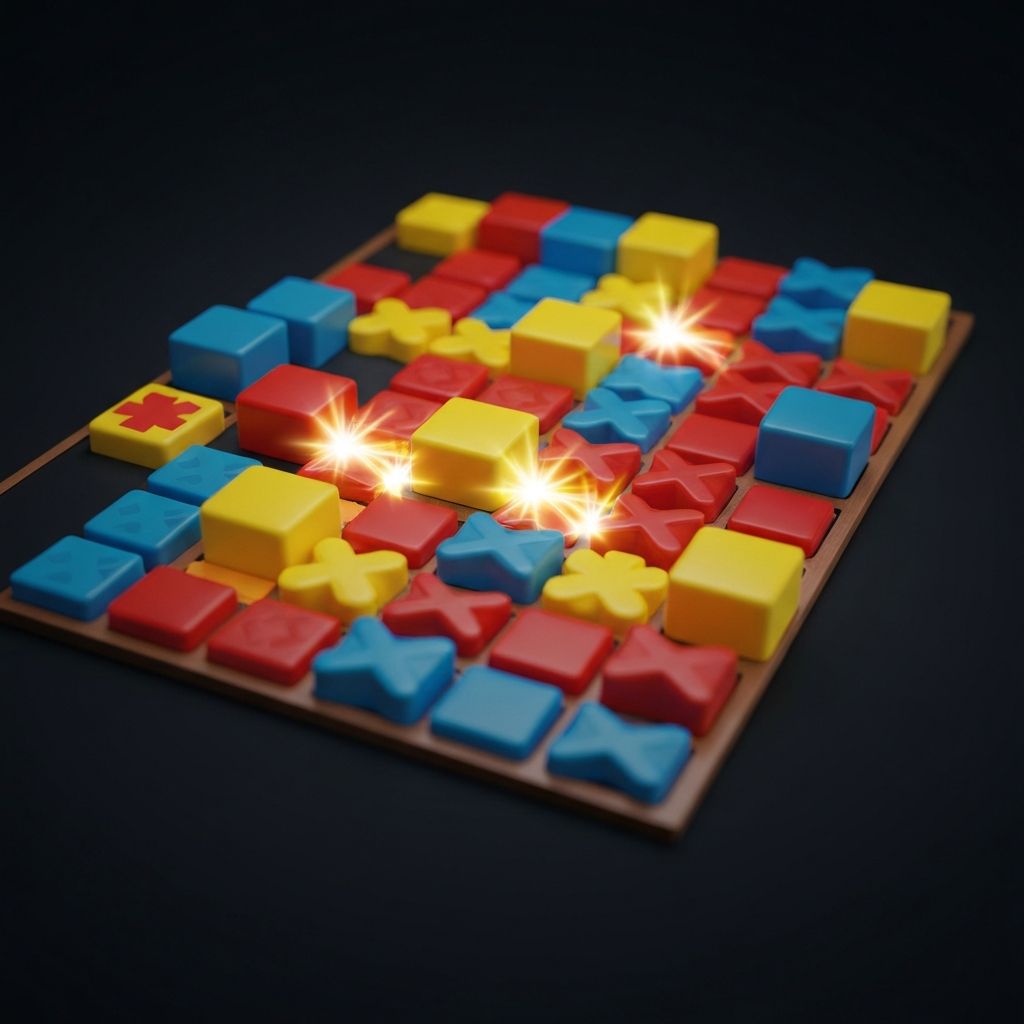
Daily Tiles operates on a straightforward principle: visual elements can be rearranged by the player to create patterns they find aesthetically pleasing.
The game does not calculate optimal arrangements or score configurations. Instead, it recognizes certain visual harmonies—combinations of colors and shapes that work well together based on design principles.
When such harmonies are detected, the game provides subtle visual feedback, letting the player know their arrangement has achieved a balanced composition.
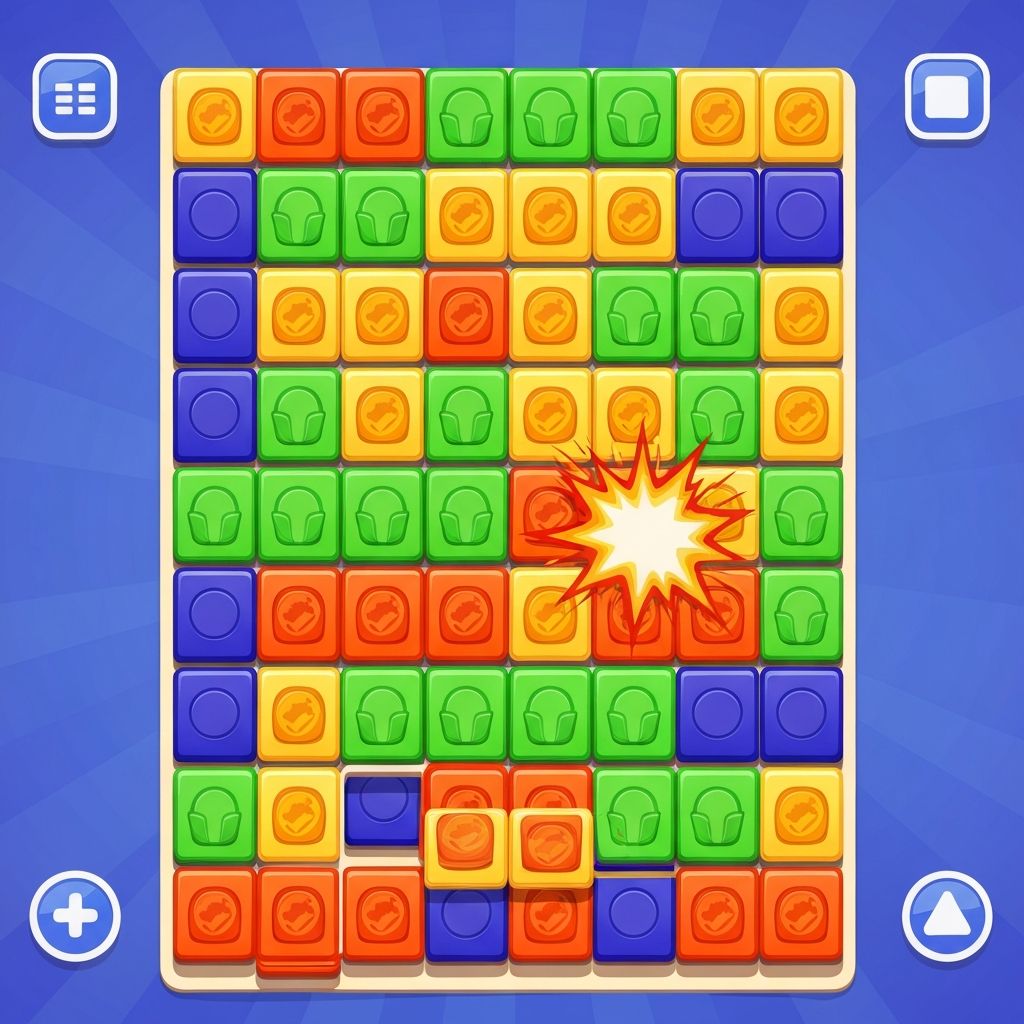
When the player opens the app, they are presented with a grid of tiles arranged in a starting configuration. This starting point varies by day but is the same for all sessions on that particular day.
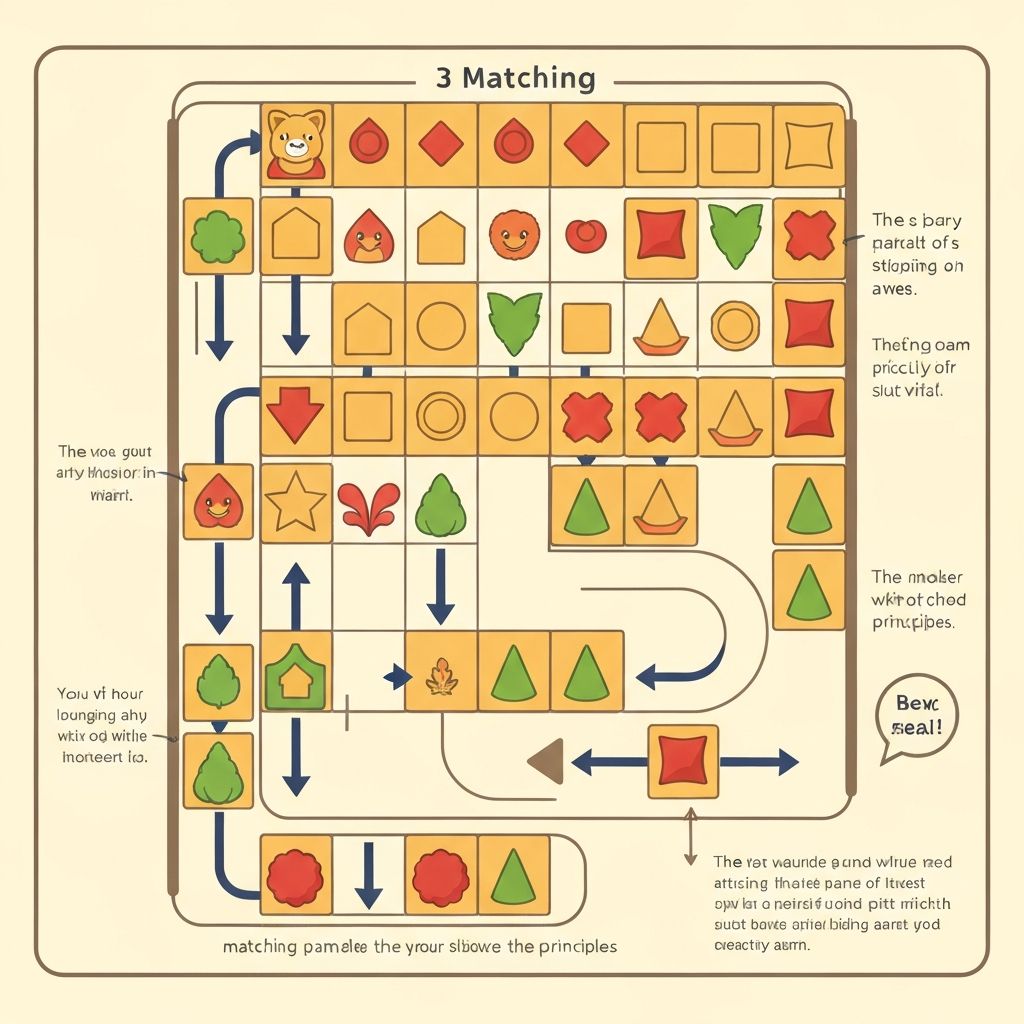
The player selects a tile and moves it to a new position. The game immediately updates the visual state to reflect this new arrangement.
The game evaluates the new arrangement to determine if it forms any harmonious patterns. This evaluation happens instantly and does not delay the interaction.
If harmonies are detected, the involved tiles display subtle visual responses. If no harmonies are present, the tiles simply remain in their new positions with no special feedback.
The player can continue moving tiles indefinitely. Each move follows the same evaluate-and-respond pattern. There is no final state or completion condition.
A typical interaction sequence unfolds as follows:
This sequence repeats for each tile movement throughout the session.
The core mechanics—tap, drag, drop—remain identical every day. This consistency allows players to develop familiarity and comfort with the interaction pattern.
Players do not need to relearn how to play each time they open the app. The familiar controls become automatic with repeated use.
While mechanics stay the same, the visual content changes daily. Each day presents a different color palette, different tile designs, and different starting arrangements.
This variation keeps the experience fresh without requiring players to adapt to new interaction methods.
The combination of consistent mechanics and variable content creates a balance between familiarity and novelty.
Many casual games gradually increase difficulty through levels or stages. Daily Tiles maintains consistent complexity throughout. Each day presents a fresh starting point with no progression curve.
Typical casual games include achievement unlocks, badges, or milestone markers. Daily Tiles omits these entirely, focusing purely on the moment-to-moment interaction with tiles.
While some casual games create urgency through timers or countdown mechanics, Daily Tiles allows unlimited time for each action. This removes stress and supports contemplative tile arrangement.
Many mobile games incorporate leaderboards, friend comparisons, or social sharing features. Daily Tiles is a purely individual experience with no comparative elements.
Common casual games include systems for purchasing power-ups, extra lives, or cosmetic items. Daily Tiles contains no in-app purchase opportunities or currency systems.
The game recognizes patterns based on several criteria:
These recognition criteria are applied consistently, so players can learn which types of arrangements the game responds to most strongly.
How content changes from day to day
At midnight in the player's local time zone, the game automatically generates a new visual theme. This happens in the background without requiring player action.
Each daily theme is created through a combination of preset color palettes, shape sets, and arrangement algorithms. The generation process ensures visual coherence—all elements of a given day's theme work well together.
All players see the same theme on a given date. This creates a subtle sense of shared experience—everyone working with the same visual elements on the same day—without direct social features.
Players cannot choose specific themes or return to previous days' themes. The current day's theme is what is available, encouraging engagement with whatever visual content is presented.
Contact us for additional information about how the game works or its design approach
Get in Touch